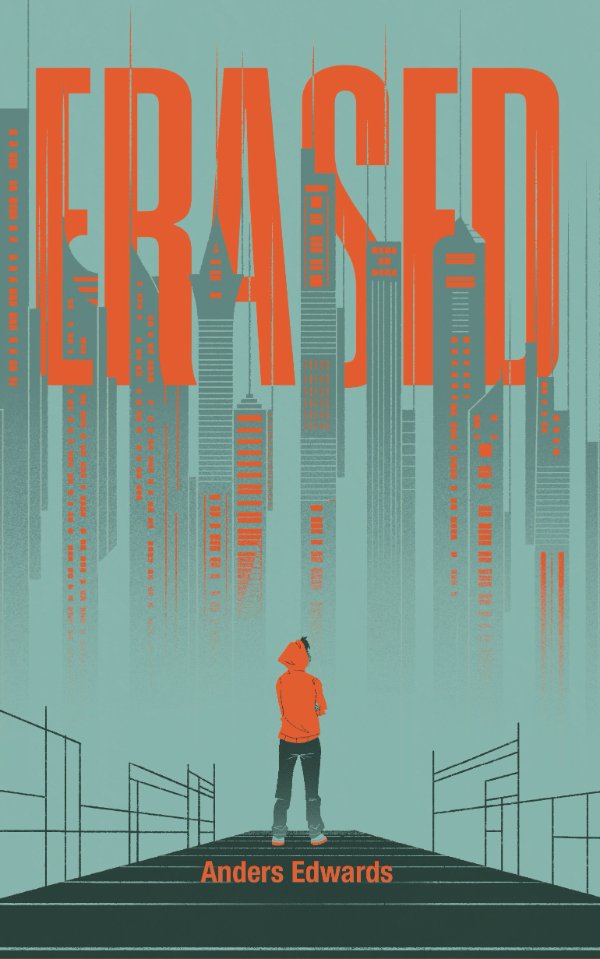
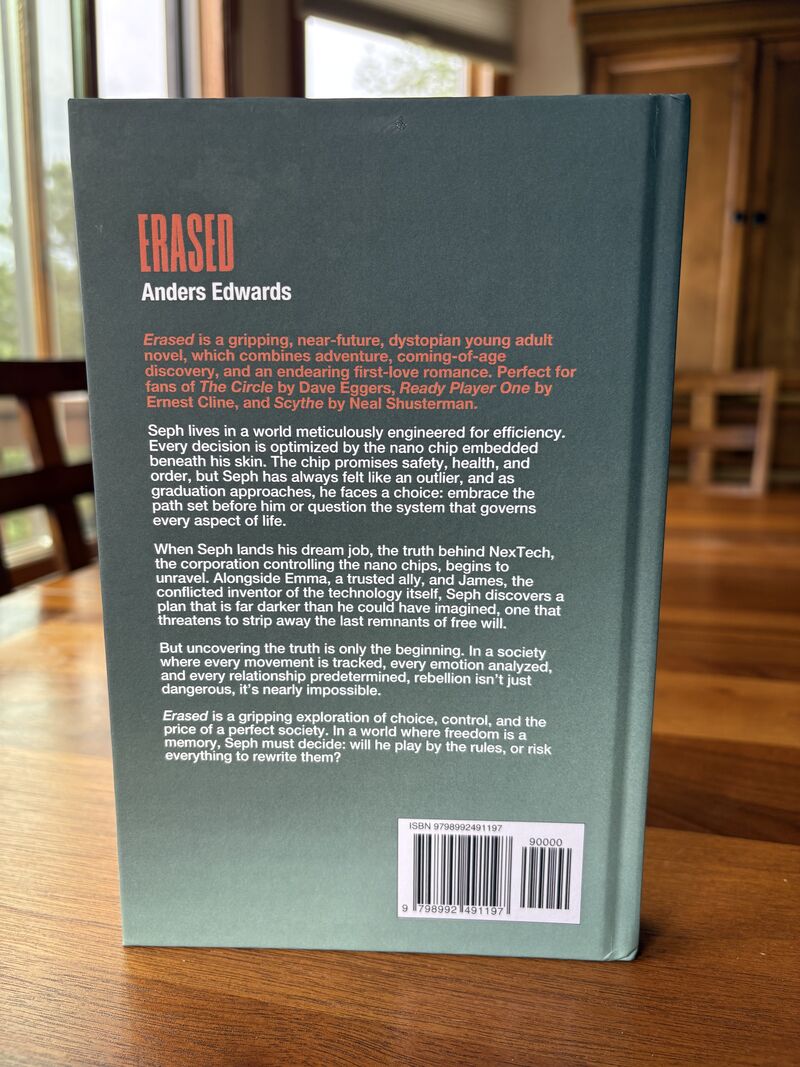
Erased
Forward
Dystopian stories are meant to challenge our worldview, to make us question the systems we have come to accept without hesitation. They force us to ask, “How could the world ever be like that?” But life is more of a slippery slope than we realize. Small shifts create a slow unraveling of freedoms until one day, we wake up in a world we no longer recognize.
This story takes place in the year 2123, in what is simply called the city. The specifics of government, geography, and nations are irrelevant—what matters is the society that has emerged. A place where progress is measured in optimization, and safety is valued above all else. A world where individual choice has been carefully molded into compliance, where certainty is preferred to freedom.
These values have reshaped life as we know it. Crime is a relic of the past, but so is privacy. Every movement, every transaction, every decision is tracked and analyzed, all under the guise of a better future.
But who defines “better”?
Technology is neither good nor evil; it is the hands that wield it that shape its impact. The people of the city were not forced into this reality overnight—it was a series of choices, small and seemingly rational, that led them here. And now, the question remains: when you live in a world where choice is an illusion, what does it mean to resist?
As you read this story, I encourage you to reflect. Not just on the world of 2123, but on the world we live in now. Progress is inevitable, but it is not always synonymous with freedom. We must always ask: at what cost?
Chapter 1
Seph
Seph leaned against his desk, his eyes drifting to the large window next to him where the city’s skyline loomed. He was sitting in one of his last classes at The Institute before graduating in a few weeks. The city outside seemed worlds away from the lecture on data structures happening in front of him.
“Seph! You’ve gotta check this out.” Callum’s voice cut through the haze.
Seph turned to see his friend grinning, holding out his halophone. The clear, glowing screen displayed a graph of biometric data, lines spiking and dipping like a living heartbeat.
Callum’s excitement was palpable. “Look at this—my heart rate’s been climbing for the past three minutes. I started thinking about our final exam, and the chip sent me a stress warning. Isn’t that insane?”
Seph leaned closer, studying the screen. Callum had been one of the latest in their class to get the nano chip implanted. Now, he was still exploring its capabilities, marveling at every new feature. The chip tracked everything: heart rate, hormone levels, sleep patterns, and disease detection. Seph knew that NexTech—the company that made both the nano chip and the software that interpreted its data—was working on even more ways for the nano chip to improve everyday life and he couldn’t wait to see what was coming next.
“That’s incredible,” Seph admitted, his voice tinged with both awe and envy.
The chip’s functionality was undeniable, but it wasn’t without its controversies. For years, his Aunt June had railed against it, leaving Seph caught in the middle, desperately wanting to fit in but knowing he wasn’t able to. His jealousy rose as he watched Callum scroll through the intricate functions on his halophone, now enabled by the power of the nano chip.
“You’re next,” Callum teased, nudging Seph with his elbow. “You can’t dodge it forever. Not in our field.”
Seph smiled faintly, but the knot in his stomach grew. Callum wasn’t wrong. Seph’s future in computer science practically demanded he get the chip. How could he show up to a job interview without it? Companies like NexTech didn’t just encourage the chip, they required it.
“I don’t know,” Seph said, shrugging. “My aunt would lose it if I came home with one of those things.”
Callum laughed, scrolling through another set of biometrics. “Bet you’ll have one within two months of graduation. You can’t even apply to NexTech without it. My cousin said they scan your ID for chip compatibility just to let you into the building.”
Seph’s smile faded. He could practically hear June’s voice arguing with him about the nano chip. But for Seph, who’d grown up dreaming of building the next big thing, it felt like a key—one he needed to unlock the future he wanted.
The classroom’s bright lights blinked faintly as the lecture wore on. Mrs. Peterson’s voice droned from the front of the room, but Seph’s mind wandered. He loved technology, loved the endless possibilities it presented. The nano chip was undeniably the best invention of their time—seeing Callum’s real-time biometric data only reinforced that. But the idea of defying June, of ignoring everything she’d taught him, felt like a betrayal.
Callum tapped his halophone, breaking Seph’s focus. “You’re gonna have to convince her, man. She’s stuck in the Stone Age. This is the future. We’re already living in it.”
Seph didn’t respond. He knew Callum was right, but the weight of the decision felt enormous. At nearly seventeen, Seph was on the cusp of graduating with a degree in computer science. In his aunt’s day, kids had until college or even after to decide what they wanted to do with their lives, but those days were long gone. School had been compressed into eight years, with students choosing career tracks by the time they reached what was once high school. Most career programs took two to four years, meaning sixteen to eighteen-year-olds now entered the workforce.
It was efficient, practical, and effective… but it also left little room for error. Seph’s career—his future—depended on his ability to navigate this transition seamlessly. And the nano chip? That was the next hurdle.
“Class is over,” Mrs. Peterson announced, snapping Seph back to the present. Her tone was as flat as her expression. “Don’t forget that your final project is due one week from tomorrow. If you don’t already have a rough draft, you’re in trouble.”
Chairs scraped against the floor as students gathered their things.
Callum slung his bag over his shoulder and grinned at Seph. “Think about it,” he said, gesturing to the data still on his halophone. “You’ll thank me later.”
Seph watched him go, the screen of his own halophone reflecting his disappointment. The world outside the classroom was moving faster than ever, and he felt like he was barely keeping up. The future was here and it wasn’t waiting for anyone—least of all him.
Seph quickly got up and dashed to get to the transpo so he could make it home before it got too crowded with the after-work congestion. The transpo was not just his only way to travel; it was the backbone of the city’s transportation system, its speed and efficiency reducing the need for individual vehicles on the road. Now, the streets were dominated by sleek transpos, with only a handful of personal vehicles driven by those wealthy enough to afford them. With its aerodynamic design, smooth metallic curves, and whisper-quiet engine, the transpo glided effortlessly through the bustling city.
Inside, Seph was greeted by plush, ergonomic seats and large holographic panels that displayed routes, news, and entertainment. Soft, ambient lighting bathed the cabin, creating a serene and luxurious atmosphere that made every ride feel effortless.
Seph sat down in the first available seat and immediately felt the vibration pick up under his feet. He sensed the gentle rock as they lifted off the ground and zipped over traffic to the next stop. He stared out the window and watched as the transpos glided down the street in perfect synchronization, like skaters tracing effortless patterns on a frozen lake, each movement precise and unbroken. He watched as passengers moved towards the wall of the transpo and watched as the side panels changed to display a personalized experience for the nano chip it sensed. Seph looked around and noticed everyone else watching a video, catching up on messages, or reading news articles. Next to Seph it was blank, yet again, another symbol that reminded him he was missing out. It was moments like these that he felt like a foreigner in his own world.
Before he could dwell too long on his misfortune, he was already at his stop which was two blocks down from his apartment. He lived in an older part of the city, built in a past that had almost been completely replaced by new modular construction. His building looked dated and old, but he also felt at peace every time he saw it. When he retreated inside the walls of his home, there was no more comparing with others, there were no more obvious signs that he was different. He could breathe a sigh of relief and just be.
The sun shone brightly outside as he made his way from the bus stop to his apartment. Kids were playing soccer near the entrance of the building, and an unfamiliar neighbor was shooing away an aggressive salesman. This was about as bad as it got; whether it was day or night, it was easy to feel safe walking home.
Just as he stepped under the archway that covered the entrance of his building he felt a gust of wind over the top of his head as a medic drone whizzed by. Someone’s nano chip must have triggered the emergency response drone system that now arrived within thirty seconds of detecting a medical emergency or criminal activity.
Seph headed up the stairs and flung open the door to his apartment, heading straight for the fridge. After he poured a glass of milk he turned around and saw his Aunt June sitting at the dining table, looking stunned.
“Are you okay?” Seph said, observing his aunt’s stoic face. Her once-chestnut hair was littered with silver, giving a softness to her complexion.
“It’s happening—what I have always feared,” she said, her eyes fixed on the wall.
“June, what are you talking about?”
“President Walker gave a public address today… Didn’t you see it?” June broke eye contact with the wall and finally looked at Seph. Seph stared at her blankly. She pulled open a video on her halophone. The phone emitted a bright light and projected the recorded image onto the wall in front of them.
“Today, I am proud to announce that eighty-six percent of the adult population has embraced the future by receiving the nano chip,” the President began, his tone imbued with a sense of accomplishment. “This technology has revolutionized our way of life, ensuring unparalleled safety and advancing our healthcare to unprecedented heights. Crime of all types is down to a level that is statistically unmeasurable.”
He paused. “I understand that there are concerns among those who have yet to receive the chip. Let me be clear: the government will not mandate the nano chip. It remains elective.” President Walker’s gaze seemed to reach through the screen, addressing Seph personally. “However, choosing not to receive the chip means opting out of the safety and benefits it provides. Our banking and healthcare systems will no longer accept any other type of identification. If you choose this path, you must be prepared to live without those amenities.
“We respect your free will and choice. The government has no intention of pursuing those who choose to live without the NexTech nano chip. Remember, it’s a privilege to partake in the advancements we offer. The choice, as always, is yours. There is a two-week grace period for anyone who has yet to receive the nano chip but wants to remain connected to banking and healthcare. Please book your appointment online and that appointment confirmation will allow you to retain access until you have the chip implanted.”
Seph pondered the implications of his words. “Why are they cutting off access to healthcare and banking if you don’t have the nano chip?” he asked.
“This is what I have been saying for the past ten years… There is more to that nano chip than people realise. Yes, it has done some good things, but I don’t trust it. There is something more going on, and I’m not going to subject myself to it,” June said defiantly.
“But June, we can’t buy groceries if we don’t have access to our bank, no one accepts cash anymore. It will be absolutely impossible to live without,” Seph replied, trying to reason with his aunt. He just wanted her to see the nano chip for the positives instead of always worrying about the ‘what if’s.
He’d heard countless lectures over the years about why he needed to resist it, about why they still lived in an old building that hadn’t been adapted to the latest smart-home automations. His sympathy for her fears had run out years ago, but June was the only family Seph had. His parents had died when he was younger and June, his mom’s sister, became his only caretaker. She was all he had. So as much as his frustration grew with her opinions, he’d always chosen to continue following her rules.
“Seph, I have decided to move out of the city.” June replied, her voice carrying a weight that instantly dispelled any doubt. “I’m joining Duke off-grid. I was really hoping it would never come to this, but I can’t stay. I will never get the nano chip and be subject to government surveillance.”
Duke was June’s cousin and even more skeptical about the societal changes than June. He’d moved far out into the mountains several years earlier and a few other family friends had moved out to be near him. June and Seph had visited him but chose not to relocate, until now. June had fallen in love with the simple way of life that resisted technology, but Seph had made it very clear he did not like it. It was like stepping back in time, devoid of all the things he’d begun to love. His heart raced. “Leave? But I thought…”
June interrupted him gently, “I don’t have much time. They’re tightening their grip and I need to be ahead of it.”
“You can’t just go!” Seph’s shock was turning into frustration. He wished she could just be normal like everyone else.
“I’ve already set up a decoy appointment for the chip to be installed next week to buy me a few days,” June responded calmly. “But at this point, there are a lot of concerning signs that if I wait much longer, I won’t be able to get out of the city.”
“Why can’t we just wait and see how this plays out?” Seph pleaded.
“Seph, I know this is all happening fast, and I should have prepared you ahead of time. But I am giving you a choice to come with me or stay here. If you stay here, you can finish up school and keep the apartment. I can prepay rent so you have time to get a job.”
“Wait, so I would live here alone?” Seph was shocked again. He’d never thought of living alone before.
“Yes, but if you do stay, I am not sure how our communication will work. It will be very hard to make contact at least for the first while, but as soon as things settle, I will find a way.”
The gravity of June’s words sank in. This was it—she was leaving everything behind. She was leaving him behind. She knew he wouldn’t agree to go and live with Duke, and perhaps that was why she had never mentioned this plan before. It was clear to Seph she’d been working on this plan for some time.
June stood up and embraced her nephew. Seph let out a big breath and sunk into her arms before watching as she grabbed a suitcase from the closet and started placing things in it.
As Seph glanced around the room, he noticed there were already other boxes packed. He walked into his room and sat down on the end of his bed, a memory flashing through his mind. It was his tenth birthday, celebrated in this very room, where he was surrounded by laughter and love. It felt like a lifetime ago.
“Seph,” June called from the living room, her voice breaking his focus. “I need to know if you are coming. If you are, you really need to begin putting your things together.”
He nodded, swallowing the lump in his throat. This was more than just leaving; it was abandoning a life they could no longer have. He sat still on his bed until he heard a knock and voices at the front door.
A few minutes later, Duke entered Seph’s room. He was a tall, rugged man with a gentle demeanor. “Hey, kid,” he said with a warm, albeit sad, smile. “Feels like ages since we last saw you.”
“Yeah,” Seph replied, forcing a smile. “Been busy with the program, you know.”
Riley, Duke’s son, walked up behind Duke and gave him a big embrace. Riley was a year younger but somehow looked much older than Seph now. They hadn’t seen each other for two years.
Duke clapped Seph on the shoulder. “June doesn’t think you want to come with us. But I want you to know, if you change your mind later, we will find a way to come back for you.”
Seph looked around his room. “I just… my whole life is here… I want to finish the program. I know you guys are nervous about what may come next with the nano chip, but it’s made a lot of things so much better. I want to finish school and see what is next for me here.” He looked down, worried they were going to argue with his resistance.
Duke’s expression softened. “You’ll find your path, Seph. You’re one of the smartest guys I know. I don’t doubt there are great things ahead for you, and I hope you are right. I hope our fears never come true.”
In the living room, June was meticulously checking each bag. She looked up as Seph and Duke entered, her eyes scanning the room, deciding what else needed to be packed.
Seph picked up a small photo frame—the last picture he had of his parents.
June noticed and gave a small nod of approval. “Keep that,” she said softly. “You’re not coming with us, are you?”
Seph shook his head. It was hard to look her in the eyes, but he also knew he needed to stand by this decision as a man. He couldn’t hide behind her anymore. Whether he was right or wrong about everything, this was a defining moment for him. He’d read books when he was younger about teenagers who went off to college, leaving their parents’ homes to live in apartments or dorm rooms. He longed for the kind of freedom that came with that coming-of-age transition, but he found himself facing a similar experience with absolutely no preparation. As shocked as he was, he did his best to put on a brave face, one that displayed the confidence he wished he felt, giving his aunt comfort that he was going to be okay on his own.
“I am going to prepay the next nine months of rent. I know you will land a job quickly and if you budget carefully, you can afford this place on your own. Don’t move into one of those new buildings, it would be way too invasive. This is one of the few buildings where you still have total privacy inside. No one is tracking you in here and this apartment will be the safest way for us to communicate when we can. Especially if you need help.”
Duke pulled something out of his pocket and handed it to Seph. It looked like an old calculator that he’d seen in a museum once. His hand wrapped around the black plastic and he felt its warmth, from being safely held in Duke’s pocket. He let his index finger softly run over the buttons and looked up at Duke with a question in his eyes.
“It’s an old relic that we have retrofitted for communication purposes,” Duke explained. “You won’t be able to contact us with it, but if we need to get a message to you, this is how we’ll do it. If anyone else stumbles upon it, they will assume it’s an old calculator passed down generationally. Keep it in your apartment. IF we need to use it, we will.”
“So when do you leave?” Seph asked.
“Now,” June said.
Seph blinked, disoriented. The reality of his situation crashing down on him. He was hoping they’d have a few more days, or at least a few more hours. He stood and watched June, Duke, and Riley carry out the rest of June’s things to the truck outside. They moved through the apartment like shadows, their movements swift but careful—a choreographed dance of escape.
After they’d gone, Seph stood in the eerie quiet of the apartment, frozen in the moment of their abrupt departure. Dishes lay on the rack, a half-read book on the sofa. A life interrupted.